
Every restaurant owner eventually builds a list of restaurant renovation ideas, usually right after a regular customer mentions the walls look tired. Turning that list into a real project brings up one hard question: how do you get the work done without losing a single day of business? As the owner of H&H Painting Co., I hear this question from restaurant owners across West Michigan more than almost any other question we get. Picking the right restaurant painting contractor is the difference between a fresh dining room by Monday morning and a week of canceled reservations. H&H Painting Co. builds every restaurant commercial painting project around your service hours, not the other way around.

Signs Your Dining Room Needs a Repaint Now
Most restaurant owners do not wake up and decide to repaint. The decision usually gets made for them, one small complaint at a time. Watch for these signs before a customer points them out first:
Any one of these on its own is minor. Together, several of them start to shape how new guests judge your food before they even taste it.
Why Restaurant Owners Put Off Repainting
Walk into ten restaurants that need a fresh coat of paint, and nine of the owners will tell you the same thing: there is never a good week to close. Weekends bring the highest ticket counts. Weeknights carry regulars who expect the doors to be open. Waiting for a slow season sounds smart, but most restaurants do not have one.
The result is a paint job that gets pushed back year after year, even as the walls keep collecting grease film, scuffs, and faded trim near the host stand. A tired dining room sends a quiet message to guests, whether you mean to send it or not: if the paint has been ignored, what else has been ignored?
That is the trap. Owners delay the repaint to protect revenue, and then the worn-out space starts to cost them repeat business anyway. Delay does not remove the cost. It just changes what is paying it.
The Real Cost of Closing Your Doors to Repaint
Here is the math that changes most owners’ minds. According to the National Restaurant Association’s 2026 State of the Restaurant Industry report, average annual revenue for full-service restaurants topped $1.78 million in 2025. Spread across a year, that works out to thousands of dollars in sales riding on a single day of service, whether that day happens to have a paint crew in the building or not.
| Closure length | What it typically costs you |
|---|---|
| One weekday closure | A full day of lunch and dinner sales, plus tips your staff did not earn |
| One weekend closure | Your two highest-revenue days often account for 30 to 40 percent of a week’s sales |
| A full week of shutdown | Roughly one-fiftieth of your annual revenue, gone in a single decision |
Those numbers are exactly why a rushed, poorly planned repaint costs more than the paint itself. A shutdown is not really a painting problem. It is a scheduling problem, and scheduling is something a good restaurant painting contractor should solve before the first can of paint gets opened.
Why DIY and Off-Season Repaints Backfire
Some owners try to solve the closure problem by painting the space themselves after hours, or by waiting for a slow week that never quite arrives. Both routes tend to carry more risk than the owner expects going in.
A trained commercial crew avoids all three problems, mainly because the schedule and the surface prep get planned before day one, instead of getting figured out as the job goes.
What a Restaurant Painting Contractor Should Handle Differently
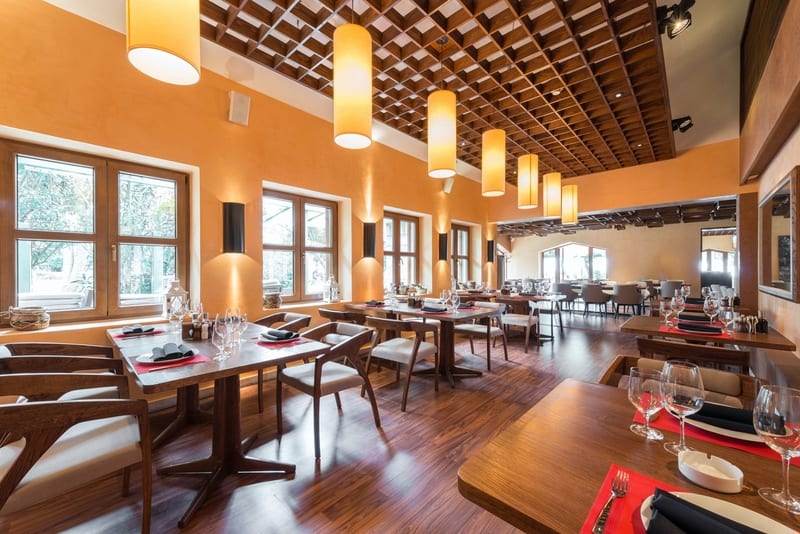
Painting an empty office and painting an occupied kitchen and dining room are not the same job. A restaurant commercial painting company needs to plan around walk-in coolers, ventilation hoods, gas lines, and a health inspector’s expectations, not just drop cloths and rollers.
Before you sign a contract, ask any painting contractor these three questions:
These three questions quickly separate a crew that understands restaurants from one that is learning on your dime.
A Painting Schedule That Keeps Your Kitchen Open
Timing is the single biggest factor in a restaurant repaint. A smart schedule protects both your revenue and your staff’s paychecks. Most restaurant projects fall into one of three approaches.
| Approach | Best for | What it looks like |
|---|---|---|
| Overnight work | Small dining rooms, bar areas, and entryways | Crew arrives after closing, finishes, and clears out before prep starts the next morning |
| Weekend closure | Full dining room repaints | Work runs Friday night through Sunday, doors reopen for Monday’s regular hours |
| Phased sections | Larger restaurants with multiple rooms | One section is painted at a time, so the rest of the restaurant stays open and seated |
An interior painter working inside your restaurant should also plan for cure time. Most commercial paints need real hours to dry hard enough for kitchen humidity and daily wear, so a crew finishing Saturday night should still leave your space ready well before Monday’s first reservation.
Low-Odor Paint Products for Occupied Restaurants
Paint fumes and a working kitchen do not mix. Standard paints release volatile organic compounds, or VOCs, as they dry, and the U.S. Environmental Protection Agency has found that indoor VOC levels can run two to 1,000 times higher than outdoor levels right after painting. That is not a small detail when your staff is standing over open flames and your guests are seated a few feet from a freshly painted wall.
Choosing a low-odor, quick-cure product protects the people in your building, not just the walls. A contractor who defaults to the cheapest paint on the shelf is passing that risk on to your kitchen staff and your diners.
A Written Plan Reduces the Risk of a Bad Repaint
A restaurant repaint should never feel like a gamble. It should run on a clear, written plan you can hold your contractor to, one that covers:
Follow that process, and your team walks into a freshly painted restaurant on schedule, your regulars never notice a disruption, and your revenue keeps flowing while the work gets done.