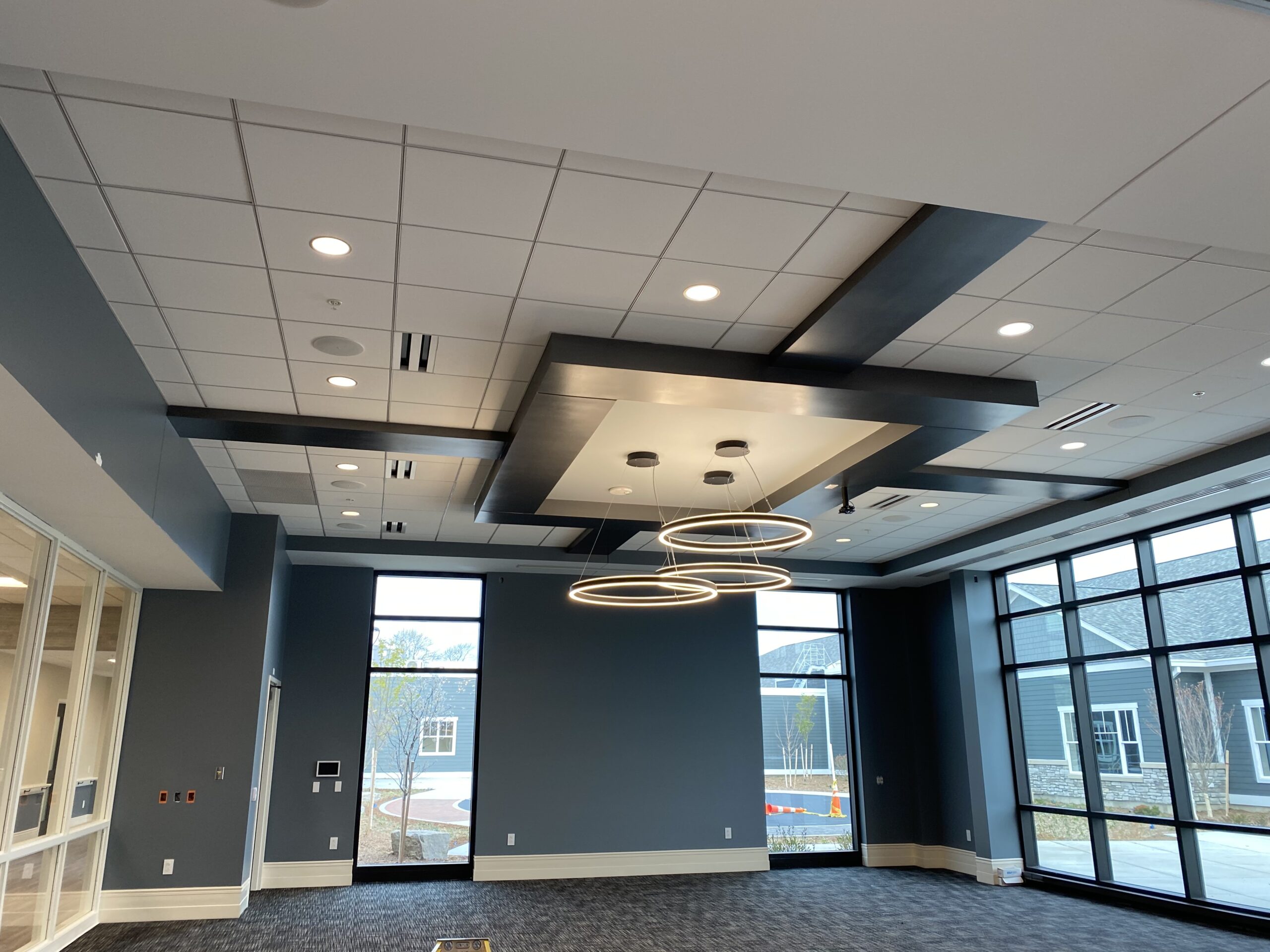

If your building has been through interior commercial painting in Grand Rapids, MI, within the last few years, there’s almost certainly leftover product somewhere on the premises. Gallons stacked behind cleaning supplies in the janitorial room. Partial five-gallon drums were pushed to the back wall of a loading dock. Quarts tucked into a ceiling-height shelf that nobody’s reached for since the last tenant build-out.
Sooner or later, a maintenance request comes in, scuffed lobby walls, dinged corridor trim, a suite that needs freshening before a new lease, and the question lands: how to reuse leftover paint that’s been sitting untouched for months or years. Getting that answer right protects your budget. Getting it wrong costs you double.

Budget Logic vs. Building Reality
Every property manager has done the math. Leftover product sitting in storage represents dollars already spent. When a touch-up request comes in, using what’s on hand looks like the obvious financial move — no purchase order, no vendor coordination, no wait time.
But that math only works when the product is actually sound. Applying degraded coatings to commercial walls creates a chain reaction that erases whatever savings prompted the decision in the first place. The finish fails. The maintenance team has to strip and redo the area. A second round of product needs to be ordered anyway. And during all of that, tenants are looking at scaffolding, smelling fumes, and wondering whether the building is being managed with any real attention to detail.
Interior commercial painting demands consistency across large, visible surfaces. In a commercial environment, a bad batch of paint doesn’t just look wrong — it signals negligence. And that perception affects retention conversations, lease negotiations, and how prospective tenants evaluate your property against the competition.
How to Reuse Leftover Paint: 5 Steps Commercial Facilities Should Follow
Professional commercial painters qualify every batch of product before it touches a client’s building. The process below adapts that same discipline for in-house maintenance teams working with stored inventory. Each step is sequential — if the paint fails at any point, stop there.
When the Paint Is Done: 6 Conditions That Remove Stored Product From Service
Stored inventory isn’t an asset when it’s degraded. These six conditions mean the product has moved from “potential savings” to “guaranteed problem,” and the sooner it leaves your maintenance shelf, the better.
Paint Disposal Options for Grand Rapids Commercial Properties
A failed product needs a proper exit from your building — not a back-door dump into a waste bin or a pour down the maintenance sink. Improper paint disposal violates Michigan Department of Environment, Great Lakes, and Energy (EGLE) regulations and exposes property owners to fines and remediation costs.
The City of Grand Rapids and Kent County operate household hazardous waste collection programs that accept paint from residents and qualifying small-quantity generators. Larger commercial volumes may require coordination with a licensed hazardous waste transporter. Water-based latex coatings in small quantities can be hardened with a commercial drying agent, left to cure fully in the open container, and then handled through standard solid waste channels.
How to reuse leftover paint in a commercial facility includes building a clear disposal pathway for products that don’t make the cut. Interior commercial painting in Grand Rapids, MI generates excess inventory on virtually every project, and a documented disposal process keeps your storage organized, your compliance record clean, and your maintenance budget focused on products that actually perform.
Knowing When to Bring In Professional Commercial Painters
Isolated blemishes — a cart mark on a corridor wall, a scuff from a moved filing cabinet, a patched anchor hole that needs blending — are fair targets for in-house work using qualified stored products. That’s how to reuse leftover paint most efficiently on a commercial property, and it keeps minor issues from piling up between scheduled maintenance cycles.
Anything broader changes the calculus. Vacant suite preparations, lobby refreshes, multi-floor common-area work, and full-corridor recoats all require volume, consistency, and speed that stored leftovers cannot reliably deliver. Older products drift in color. Sheen levels flatten with age. And discovering mid-project that your inventory doesn’t cover the full scope leaves a visible break in the finish that every occupant and visitor registers.
Professional commercial painters arrive with batch-matched products from current manufacturing runs, preparation equipment designed for commercial substrates, and crew capacity to execute within the narrow windows that occupied buildings allow. Commercial painters working under formal contracts also manage scheduling and coordination, carry appropriate liability coverage for commercial environments, and provide completion documentation that property managers need for tenant files and ownership reporting. How to reuse leftover paint is a valid maintenance strategy — but for scoped projects where the outcome affects tenant perception, property value, and lease marketability, professional execution eliminates the variables that turn a planned refresh into a reactive repair.